The Rise of Short Dramas: How a Phone-First Format Went Global
From online serial fiction and short-video platforms to dedicated apps around the world: a cautious overview of how vertical short dramas grew into an international format.

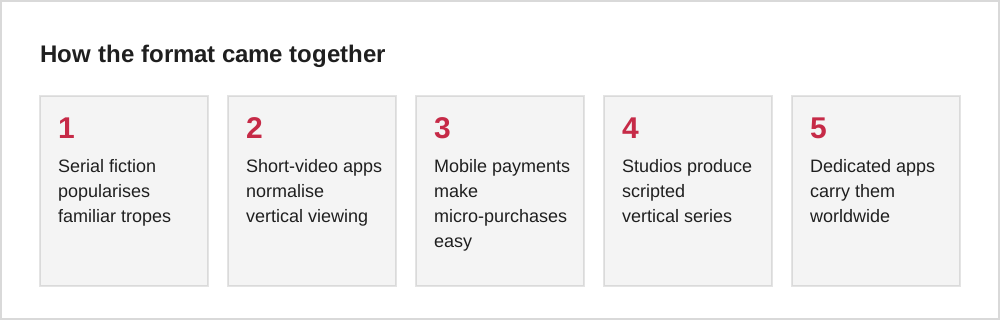
Vertical short dramas did not appear out of nowhere. They grew out of several trends that came together over the past decade: serialised online fiction, short-video platforms, mobile payments and audiences used to watching on their phones. This guide gives a careful overview of how the format developed, without relying on unverified figures.
Roots in serial fiction and short video
Many short drama stories share their DNA with online serial fiction, where readers pay chapter by chapter for long romance, revenge and fantasy stories. Short-video platforms, meanwhile, trained audiences to watch vertical clips and swipe for the next one. Combining the two produced a natural fit: serialised stories, delivered in vertical minute-long pieces, paid for one episode at a time.
Rapid growth in China
The format, often called micro-drama, grew especially quickly in China in the early 2020s. Its fast growth also attracted attention from regulators, who have issued rules and guidance on the content and distribution of online micro-dramas. Exact market figures vary between sources and are frequently revised, so treat any single number with caution.
Going international
In the early 2020s, dedicated apps began offering short dramas to audiences in English-speaking and other markets. Some productions were dubbed or subtitled versions of existing series; others were written and filmed specifically for international audiences, often with local actors. Several of these apps gained significant attention in app store charts, according to app analytics firms.
| Approach | What it involves |
|---|---|
| Dubbing or subtitling | Existing series translated for new audiences |
| Remakes | Popular scripts reshot with local casts |
| Original productions | New stories written for international viewers |
Trope names such as "secret billionaire" or "contract marriage" travel well across languages, which helped the format adapt quickly to new markets.
Criticism and debate
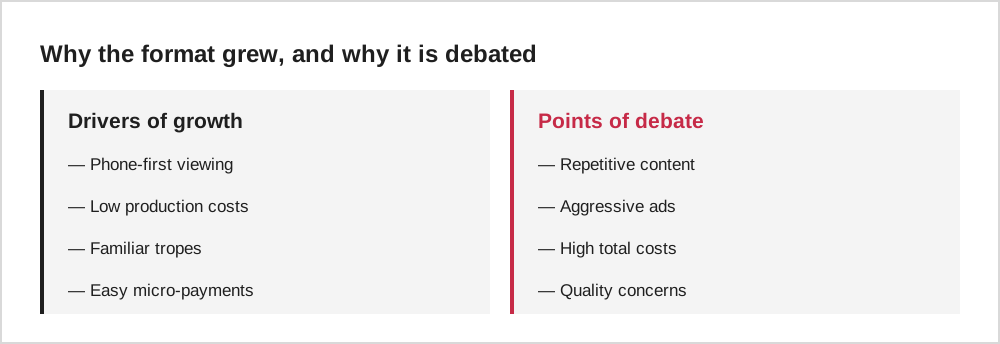
The format has also attracted criticism: concerns about repetitive or exaggerated content, aggressive advertising, and payment models that can become expensive. These debates are part of the format's story, and they explain why understanding coin systems and subscriptions matters for viewers.
Why the format suits the phone era
The format fits modern viewing habits in several ways. Episodes match the length of short breaks, vertical framing matches how people hold their phones, and episode-by-episode payment matches how people buy small digital items. Together, these features make short dramas easy to start and easy to continue.
The same features explain the debates. Easy starts and small payments can add up to large totals, and the constant hooks can make stopping difficult. Understanding the design is the best way to enjoy the format while staying in control.
The business model behind the growth
Short dramas grew quickly partly because the economics are unusual. Production budgets are small compared with television, while revenue comes directly from viewers paying per episode or per week. A successful series can recover its costs quickly, and studios can test many stories at once to see which ones catch on.
Advertising also plays a large role. Apps spend heavily on adverts across social platforms, often showing dramatic clips from their series to attract new viewers. Industry coverage has noted that marketing can cost as much as, or more than, production itself. That spending is part of why the format became visible so quickly.
What might come next
Observers expect the format to keep changing. Some studios are experimenting with higher budgets and well-known actors, others with more varied genres such as thrillers, comedy and workplace stories. Established streaming services and social platforms have also shown interest in short serial fiction.
It is too early to know whether vertical dramas will become a lasting genre alongside television or remain a niche. Their history so far suggests they will keep borrowing from serial fiction, social video and soap opera, and that the stories which travel best will be the simple, emotional ones that work in any language.
Common questions
Are all short dramas made in China?
No. While the format grew rapidly in China, short dramas are now produced in many countries and languages, including original English-language productions.
Will the format last?
Nobody knows for certain. Formats evolve; what seems likely is that phone-first, serialised storytelling will continue in some form.
The short version
Short dramas combine serial fiction, vertical video and micro-payments. The format grew quickly in China and spread internationally through dubbing, remakes and original productions, alongside ongoing debate about content quality and spending.