Filming a Short Drama on Your Phone: A Practical Guide
Stability, light, sound and framing: how to shoot a watchable vertical mini-series with a smartphone and a small group of friends.
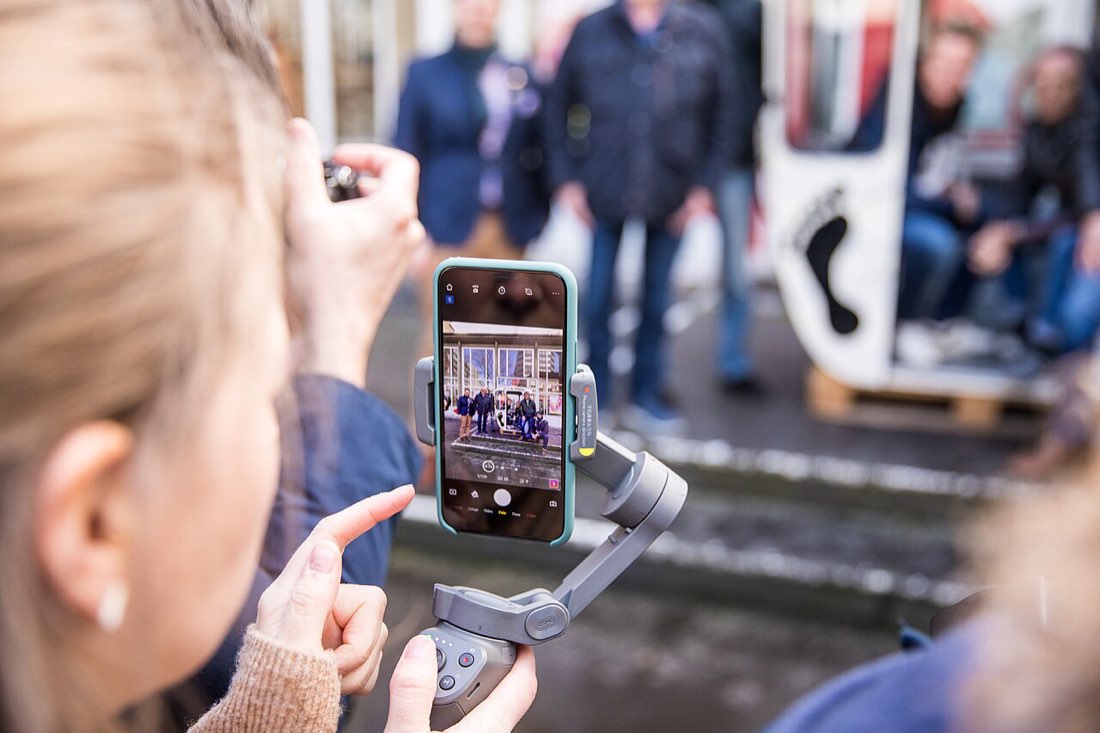
Modern phones are capable cameras, and the vertical short drama format is designed for phone screens. With a little planning, a small group can shoot something genuinely watchable. The biggest improvements come not from expensive gear but from stability, good light and clean sound.
Basic kit
| Item | Why it helps |
|---|---|
| Phone tripod or stabiliser | Steady shots look far more professional |
| Clip-on microphone | Clear dialogue matters more than sharp images |
| A window or soft lamp | Even light on faces |
| Spare battery or power bank | Shoots take longer than expected |
Light faces evenly
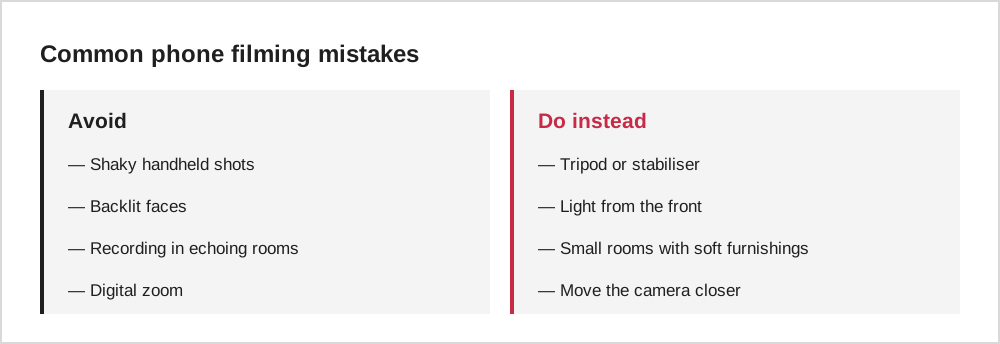
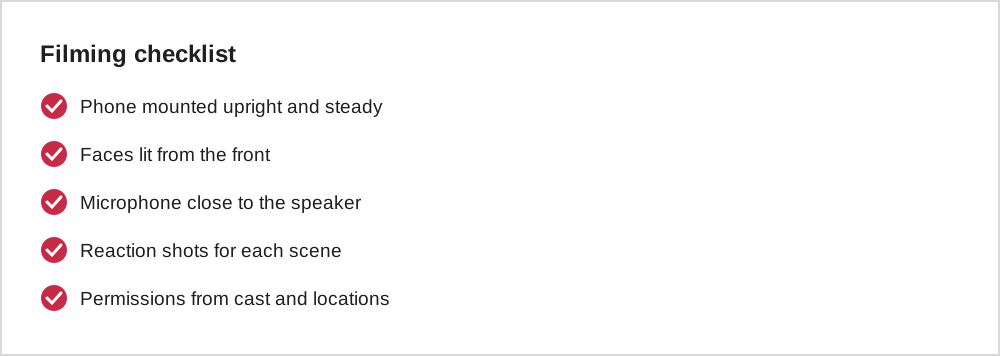
Faces fill most of a vertical frame, so lighting them well is the priority. Face your actors towards a window or a soft light source. Avoid strong light directly behind them, which turns faces into silhouettes.
Sound is half the picture
Viewers forgive slightly imperfect images more easily than muddy or echoing dialogue. A small clip-on microphone near the speaker's chest makes a big difference. Record in quiet rooms with soft furnishings, which reduce echo.
Record a few seconds of silence in each location. Editing apps can use it to reduce background noise.
Frame for vertical
Compose for the upright screen from the start: faces in the upper third, characters stacked in depth rather than side by side, and props held near faces. Our guide to vertical framing explains these techniques.
Shoot efficiently
Film all scenes in one location together, even if they appear in different episodes. Take a couple of versions of important lines, and capture reaction shots of every character in a scene; they are invaluable when editing.
Respect people and places
Get permission from everyone who appears on camera and from property owners where you film. Use music you have the rights to, or royalty-free tracks, rather than popular songs.
Directing actors for the format
Performances for vertical short dramas need to read clearly in close-up. Encourage actors to hold key reactions for a beat longer than feels natural, so the editor has time to cut to them. Ask them to keep their faces turned slightly towards the camera in two-person scenes, so both expressions stay visible.
Rehearsing the turn and the cliffhanger of each episode is worth the time. These moments carry the episode, so getting a few versions with slightly different intensity gives you choices when editing.
Phone camera settings
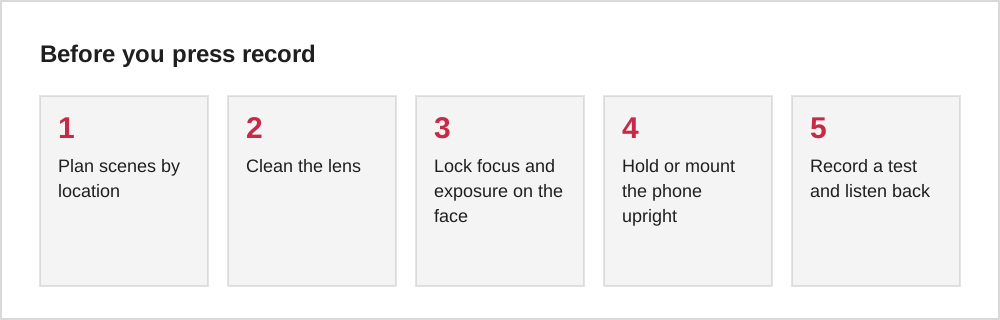
Before shooting, set your phone to record vertical video at a consistent frame rate, such as 30 frames per second, and the highest resolution your storage allows. Turn off automatic features that change between shots where possible: lock exposure and focus by pressing and holding on the subject, and avoid switching lenses in the middle of a scene.
Clean the lens before every scene; fingerprints are the most common cause of soft, hazy footage. Put the phone in airplane or do-not-disturb mode so calls and notifications do not interrupt takes, and make sure you have plenty of battery and storage. A small power bank is one of the most useful pieces of kit.
A one-day shoot plan
For a three-episode test series, plan a single day. Morning: shoot all scenes in your first location in story order where possible, starting with the widest shots and finishing with close-ups. Midday: move to the second location and repeat. Afternoon: pick up reaction shots, inserts of props or phones, and any lines that need another take.
Keep a simple shot list and tick items off as you go. At the end of the day, copy all footage to a computer or cloud storage before deleting anything. Losing a day's footage to a full or damaged phone is a painful but common mistake.
Common questions
Do I need a special app to film vertically?
No. Your phone's camera app records vertical video when you hold the phone upright. Some apps offer manual controls, which can help with focus and exposure.
How long should a first project be?
Three to five episodes of about a minute each is a manageable first project.
The short version
Stabilise the phone, light faces from the front, put a microphone close to your actors, and compose for the vertical frame. Shoot by location, capture reactions, and get permission from everyone involved.