How Short Dramas Are Filmed: Fast Shoots, Few Locations, Big Reactions
Short dramas are often filmed in days rather than months. How fast production schedules shape locations, lighting, acting and the look of the finished show.
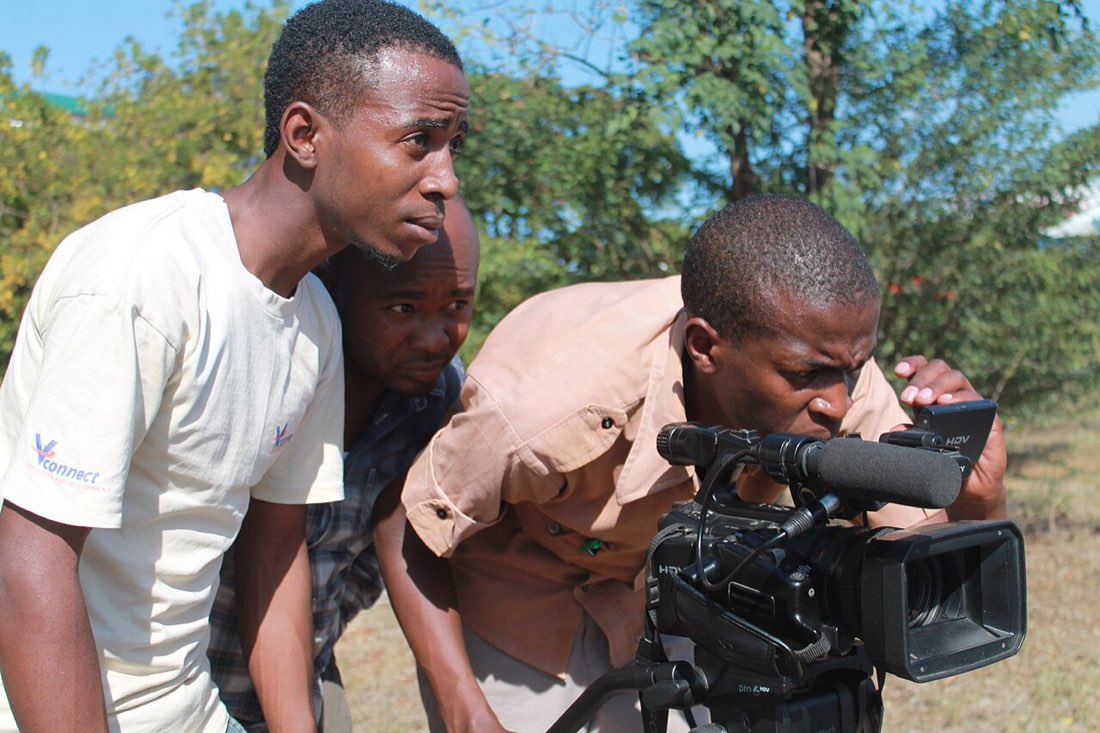
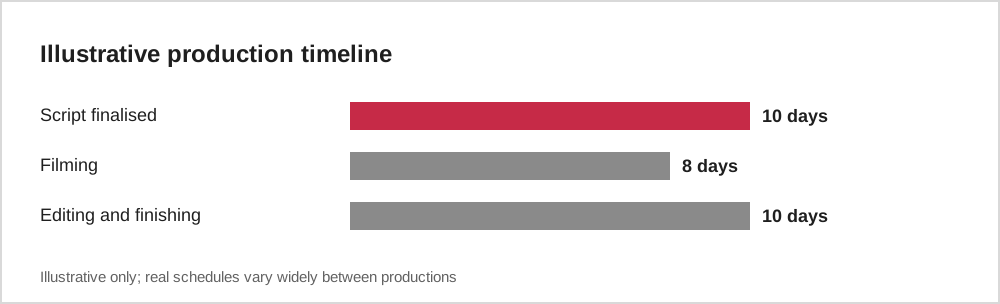
One of the most surprising facts about vertical short dramas is how quickly they are made. Industry reporting frequently describes entire series, sometimes running to dozens of episodes, being filmed in a matter of days or a couple of weeks. That speed is possible only because every part of production is built around efficiency.
Why shoots are so fast
- Few locations. A mansion, an office, a hospital corridor and a restaurant can cover a whole series.
- Short scenes. Each episode needs only a minute or two of finished footage.
- Simple setups. Lighting and camera positions are chosen to be quick to move.
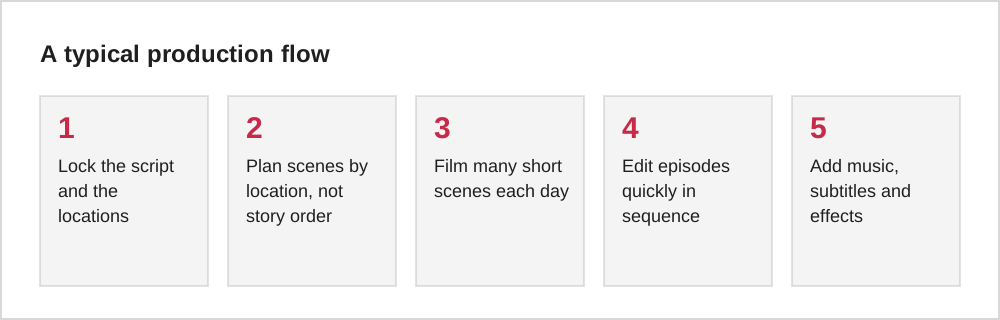
- Shooting out of order. All scenes in one location are filmed together, regardless of where they fall in the story.
Locations do a lot of work
Because locations are limited, they are dressed to suggest wealth, power or danger at a glance: large staircases, expensive cars, glass offices, banquet halls. Viewers learn to read these settings instantly, which supports the format's fast storytelling.
| Setting | What it signals |
|---|---|
| Grand staircase | Wealth and family status |
| Boardroom | Power and business conflict |
| Hospital | Crisis, secrets, reconciliation |
| Banquet or party | Public humiliation or reveal |
Performance style
With little time for subtle build-up, actors play reactions clearly and strongly. Shocked faces, pauses before reveals and decisive gestures help each moment register on a small screen. This is a deliberate style that suits the format.
The reaction shot is one of the most important shots in a short drama. Often the camera stays on the faces of people witnessing a reveal rather than the person making it.
Equipment and framing
Short dramas are generally filmed with professional cameras framed for vertical delivery, although some smaller productions use phones. The key requirement is composing for a 9:16 frame from the start; see our guide to vertical framing.

A day on a typical shoot
A day on a fast shoot is usually organised around one or two locations. The crew sets up lighting and camera positions that can be reused for several scenes, then moves through the script in location order rather than story order. Actors may play scenes from episode five and episode forty within the same hour, changing costumes between them.
Continuity becomes a major challenge under these conditions. Costume, makeup and props must match across scenes filmed out of order, which is why productions rely on photos and notes to keep track.
Schedules built around locations
Because shoots are short, schedules are built around places rather than story order. All scenes in the mansion living room might be shot on one day, all office scenes the next, regardless of which episodes they belong to. Actors may play an early scene in the morning and a climactic one in the afternoon.
This requires careful continuity: costumes, props and hair must match across scenes filmed hours apart but shown episodes apart. A continuity supervisor or the director's assistant often keeps photos and notes for each scene. Small mismatches, such as a different coat between two parts of the same conversation, are a common side effect of the pace.
Roles on a small crew
Short drama crews are lean compared with television. A typical set might include a director, a camera operator, a sound recordist, a lighting technician, a makeup artist, a production assistant and the cast. Some people cover several jobs, and the editor may begin cutting footage while filming is still underway.
The lean crew is part of what keeps costs down, but it also explains some of the format's look: simple lighting set-ups, mostly static camera positions and dialogue recorded close to the actors. When a series looks more polished than usual, it often reflects a larger crew or a longer schedule.
Common questions
Are short dramas filmed vertically or cropped from horizontal footage?
Productions designed for the format are planned and framed for vertical viewing. Cropping horizontal footage tends to cut off important parts of the frame.
Why do some shows reuse the same locations?
Location costs are a major part of any budget. Reusing a small number of well-dressed locations keeps fast, low-budget production possible.
The short version
Short dramas are filmed quickly by limiting locations, shooting scenes in location order and keeping setups simple. Bold performances and instantly readable settings help each minute-long episode land on a small screen.