Revenge Dramas: The Anatomy of a Comeback Story
Betrayal, transformation and payback in instalments: how short drama revenge stories are structured and why they suit the minute-long episode.

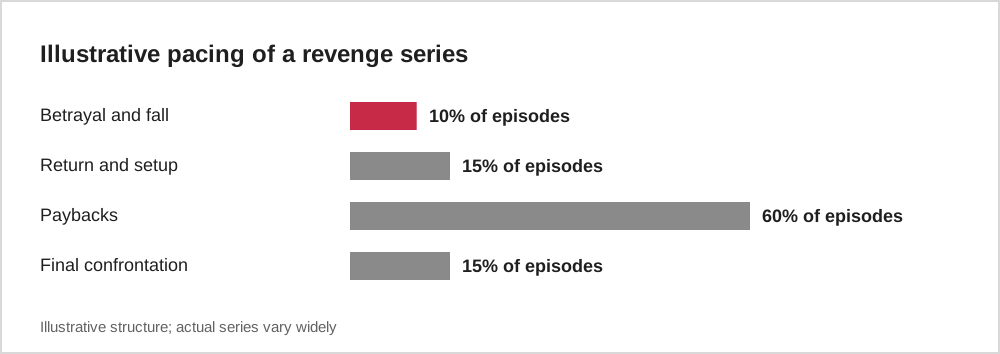
Revenge stories are a cornerstone of vertical short dramas. A character is betrayed by a spouse, a family or a business partner, loses everything, and returns transformed to make every wrongdoer pay. Few story shapes suit short episodes as well, because revenge can be delivered in small, satisfying instalments.
The classic structure
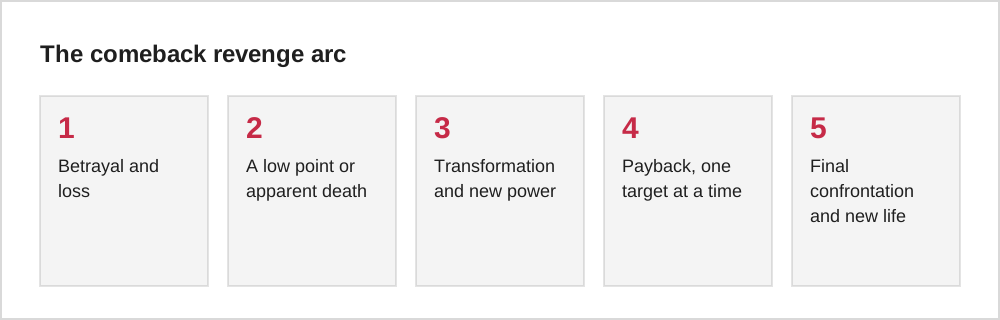
The transformation step varies: a time jump, a new identity, an inheritance, or simply a change of attitude. What matters is that the hero returns with leverage the betrayers never expected.
Why it works in short episodes
- Instalments of justice. Each episode can deliver a small victory: a lie exposed, a deal collapsed, a cruel relative humiliated.
- Clear villains. Betrayers are usually obvious, which makes every payback easy to cheer.
- Escalation is built in. Each target is more powerful than the last, so stakes rise naturally.
Common variations
| Variation | Typical setup |
|---|---|
| The betrayed wife | A spouse's affair and a scheming rival trigger the plot |
| The disowned child | A family casts out one member, who returns successful |
| The framed employee | A colleague steals credit or frames the hero |
| The second life | The hero is reborn with memories of the betrayal |
The second-life version overlaps with our guide to rebirth and time-travel stories.
If a revenge series feels repetitive, it is often because the middle section repeats one payback pattern. Skimming ahead to the next target can rescue your interest.
What to watch for
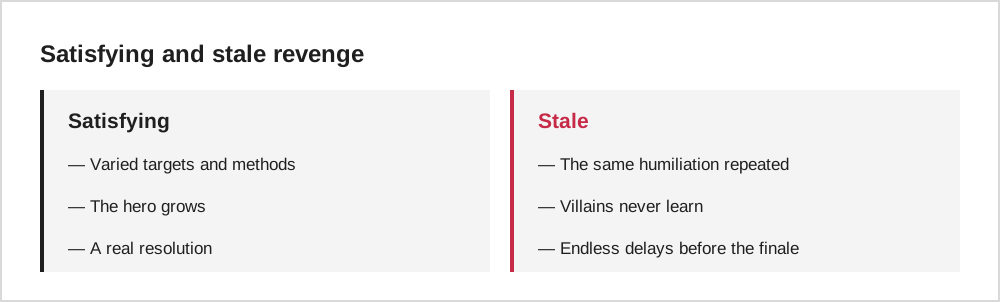
Revenge stories can become exhausting when every episode is another humiliation with no character development. The best versions let the hero change, question their own anger, or build something new alongside the payback.
Variety in the paybacks
The most satisfying revenge series vary their paybacks. One target is exposed in public, another loses a business deal, a third is caught in their own lie. Each method shows a different side of the hero's intelligence and keeps the middle of the series from feeling repetitive.
Strong series also give the hero allies and setbacks. A payback that partly fails, or an ally who turns out to have their own agenda, adds uncertainty. Without setbacks, viewers stop wondering whether the hero will succeed, and the story relies only on how humiliating the next payback will be.
The midpoint turn
Around the middle of most revenge series, the story shifts gear. Early episodes focus on small victories: the heroine exposes one lie, wins one argument or takes back one possession. At the midpoint something larger happens. She discovers that the betrayal was planned by someone she trusted, or that her enemy has a powerful ally, and the stakes rise from personal embarrassment to survival.
This turn keeps the second half from feeling repetitive. Without it, a revenge plot can become a list of identical humiliations. If you are writing your own series, plan the midpoint revelation before anything else. If you are watching, the midpoint is a good place to decide whether the story is building towards something or simply looping.
Revenge and fairness
Revenge stories are satisfying because they restore a sense of fairness. The audience has seen the injustice and wants it corrected. The best series keep that sense of fairness alive by making sure the heroine's actions are proportionate and that innocent bystanders are not harmed along the way.
When a series lets the avenger become as cruel as the people who wronged her, viewers often feel uneasy rather than satisfied. Some writers use this deliberately, asking whether revenge is worth what it costs. Most short dramas keep things simpler, but even simple stories feel better when the payback fits the original wrong and the heroine ends up free rather than consumed by anger.
Common questions
Why do revenge dramas often start with an apparent death?
A dramatic low point resets the hero's life and gives the story permission to transform them. It also makes their return a shock to the betrayers.
Do revenge dramas always end happily?
Most end with the hero vindicated and starting a new life, often with a new romance. Darker endings are less common in the format.
The short version
Revenge dramas follow a betrayal, fall, transformation and payback structure, with justice delivered in small instalments that suit minute-long episodes. The best ones vary their paybacks and let the hero grow.